With the holidays approaching, I though it might prove interesting to write about my favorite holiday movies; and by "holiday" I mean Christmas movies. I have a couple of favorite horror films I like to watch during Halloween, but that holiday passed by without me even thinking about adding them here. Maybe next year. Thanksgiving isn't a holiday I generally associate with any particular film because I can't think of any Thanksgiving-themed film I enjoy all that much, at least enough to write about.
Since I missed Halloween, I thought I should write a post about the next big holiday coming up: Christmas. Of course, if you don't celebrate Christmas but instead another December holiday, then please just insert your holiday of choice whenever I write Christmas; as someone who was raised Christian--though as an agnostic I don't think I fall under that category anymore--Christmas is just the name that has stuck around. But this blog entry is not about religion (though I may write one someday entirely devoted that subject), and none of the films listed here are religious in theme or plot, at least not the in the way I relate to them.
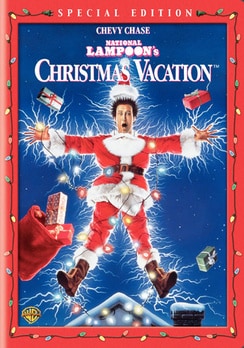
National Lampoon's Christmas Vacation
First up is a comedy. I decided to start with this film because the others will have a more serious interpretation attached to them, and my enjoyment of this particular gem is not academic: I just simply love watching this film around the holidays. It makes me laugh.
Christmas Vacation follows the adventures of the Griswold family as they deal all the fun and terror of hosting Christmas at their home. Chevy Chase and Beverly D'Angelo star as the patriarch and matriarch of the Griswold family and it is D'Angelo's character, Ellen, who, along with the children, seem the sanest of the bunch. Indeed, much of the laughter comes from the crazy antics of Chase's character, Clark, and the rest of the family.
One of my favorite scenes involves Clark applying some kind of lubricant to the bottom of his snow sled--more of a snow shield used as a sled--and rocketing like a bullet over a frozen pond, through a forest, and eventually stopping the middle of a road.
Another sequence that just cracks me up is when the oldest--and I do OLD--members of the family arrive, played by William Hickey and Mae Questel. The combination of a dotty old woman and the hysterically annoying voice of Hickey is wonderful, not to mention a reminder that while we cannot choose our family, the holidays are a socially acceptable time of the year to get plastered.
And then there's the beauty of a line, delivered by the wife of Clark's boss, played by Natalia Nogulich: "Yes officer, it seems my husband's been abducted. The man was wearing a blue leisure suite. Plates were from Kansas. He was a huge, beastly, bulging man." I can't quite pinpoint exactly why that line gives me the giggles, but even as I typed it out, I chuckled.
Truly, this is the film I turn to every Christmas for a good laugh, and it never disappoints.
The Nightmare Before Christmas
On the surface, this film may not look as though it really fits within the category of Christmas films since it bridges the divide between the most scared holiday for many and the most sinful. The beauty of Nightmare is in its daring to bring together two holidays that, before, many had not. What's funny is that Tim Burton got the idea while shopping and was struck by the odd pairing of Halloween and Christmas decorations as the store was shifting between the two seasons. See, inspiration can come from all sorts of places.
Now, in my analysis, I find that Jack Skellington represents the creative spirit, or the creative spark of imagination. After all, in order to truly bring about anything new, one must practically roam to the edge of sanity, cross that border, and hopefully come back with some fresh new insight, if they even come back at all. There's a reason why some of the most creative minds in the world don't do well when interacting with mere mortals; they just think differently.
And Jack is just that type of character. Watch as he follows through with his desire to take over Christmas (though not in a dictatorial way as he simply wants to give Santa a break); he goes along with such enthusiasm, despite being warned by Sally, that it's hard not to be swept up along with his crazy scheme.
I was not allowed to watch the film when it first came out because my parents believed it was sacrilegious and disgraced the true meaning of Christmas. I, however, now that I've seen it multiple times think nothing of the sort. In fact, my second favorite scene in the whole film occurs when Jack has been blown out of the sky and lands in a cemetery. Take heed, the director doesn't shoot him in a grave, but in the arms of an angel. Jack's intent was not to terrify or destroy Christmas, but to bring something new to those he loves and the people who celebrate during the all the different holidays. Despite the fact that he doesn't understand the nuances of Christmas, he understands the spirit and that is to spread joy and happiness to those around us. One person's joy is another's misery.
Since I told you about my second favorite scene in the film, I think it would be unfair to then move on the next film in my list without mentioning my favorite scene in the film. "Jack's Lament" is by far the most beautiful moment of the film, which is fitting because it sets up Jack's motivation. The song itself is sung by Danny Elfman, who also wrote all the songs and orchestrations. Elfman's voice is mesmerizing here (not to mention throughout the entire film), coupled with the striking visuals of Jack standing on top of hill with a curious little curved appendage and framed by a massive yellow moon. The first time I saw this particular scene, my jaw dropped to form a perfect "O".
This film is still the standard to which I measure all stop-motion films, and so far I haven't seen another quite like it, and likewise, Jack Skellington is among my favorite characters in literature.
The Polar Express
The Polar Express has quickly become not only my favorite 3D IMAX film ever (really the only 3D film I've seen that was worth the price), but also my favorite Christmas film.
There's not a single reference to any specific religion in the film, at least not one I can think of beyond the obvious reference in the fact that Christmas is being celebrated, but the holiday has become so separated in recent years from its religious roots that it's quite easy to not think of the birth of Christ when thinking of Christmas.
Well, I promised I wouldn't get into any religious talk and there I go writing about the lack of Christ in Christmas. Moving on...
As far as the film goes, it's a wonderfully mysterious film that doesn't make the main character's journey on the road to belief easy, and such a journey shouldn't be easy: Faith isn't easy. Indeed, at times there seem to be more questions raised than answers.
However, it's Robert Zemeckis' subtly that wins me over every time. In quite a few of Zemeckis' films, especially Contact (which I consider to be his best), a subtle magic works it's way through the hearts and minds of the film's audiences.
Take for instance the scene when Hero Boy decides to board the train, against his own skepticism, and notices the snowman in his front yard waving. But is it really waving? The train's slip stream could have caused the snowman's arm to move. There are many moments like that where seemingly magical elements are presented in such a subtle matter that the hero's skepticism is understandable.
Another of my favorite visuals occurs when the train is winding its way up a mountain, heading to the apex. Zemeckis' camera placement gives the audience the impression that the train will just fly off into the air (after all, it did just make its way across a frozen lake), but with a slight shift in perspective, we're shown a bridge that had been hidden by the mountain. It's a wonderful moment that plays with our desires to see something magical, only to have the expectation deflated when we realize it was only a trick, which is exactly what Hero Boy is experiencing: Moments of what look to be created by magic are only later revealed to be tricks of perception.
Now, the reason I believe this film is the best 3D film I've ever seen comes from the simple fact that the film is enhanced by the extra dimension rather than giving us something to distract our eyes. The first time I saw the film was on TV, and I loved it from the moment I saw that snowman wave. however, I felt the animation wasn't all that great. It was flat and seemingly without warmth, and the human animations seemed just a bit creepy. But when I saw it again in 3D IMAX, I saw animation so detailed and so wonderfully rendered that I was amazed I hadn't seen it that way before. The film's visuals were truly enhanced, and not just by the size of the screen. The human characters no longer looked like flat caricatures of what a human is supposed to look like, but characters with depth, shading, and rounded features that showcased all the minute facial expressions I didn't see on TV, or rather couldn't see.
If more 3D films were made with his type of enhancement in mind, I wouldn't mind paying the extra moment for tickets. Maybe not....
These are my favorite holiday films. They remind me of what I like best about the holidays: It's the time of the year when the best of humanity is on display; Christmas is the time of the year when I have the most hope for us all, hope that deep down most of us are good and that all we need in life is a little faith; not faith in a higher power, but faith each other.
On that note, I'm actually curious to know what films all of you like to watch during the holidays. What films make you feel all warm and fuzzy? What films make you want a hot, steaming cup of hot chocolate?
There is something special here... I may not know exactly what that is, but it's there. I know it!
Thursday, December 1, 2011
Wednesday, November 9, 2011
Just an Update of Sorts
Hello all! It has been over a month since my last post and I figured I should add something here, just to let everyone know that I'm still very much alive.
Really, this semester has flown by much faster than I had anticipated. With four classes and my new job as tutor (technically Instructional Specialist II) at the Writing Center, I haven't had much time to think about anything except work, grading papers, helping students with their essays, and decompressing on the weekends.
Of courses, this does not mean I've neglected my movie watching. On the contrary, I've watched a few good films and a couple great ones. The only thing I've missed over the past month is my inability to make it to the theater. All of my movie watching has taken place primarily at home through Netflix.
Below is a short rundown of the films I've recently seen and a quick statement on what I thought about each. Nothing too extensive, just my reviews in miniature. This is not all of them, I think, but it's enough for now.
Young Frankenstein
I have no idea how I've missed this film over the years, but finally it made its way to my TV screen and in a beautiful Blu-ray version. The film itself is hysterical; however, it really is Gene Wilder's film as his facial expressions alone sent me into fits of giggles. Gene Hackman is equally as funny, and he only has one scene. Needless to say, I loved it and can't wait to buy it for my own library.
Ticked-Off Trannies with Knives
This particular film will not be everyone's ideal choice for a date night. However, it has its charms. Anyone who has seen the drag shows in S4's Rose Room here in Dallas will recognize the main characters as regular drag performers. The film is intentionally poor in some areas, due to the nature of the genre, but two performances stood out the most: Kelexis Davenport and Tom Zembrod. Davenport is my personal favorite, especially when she utters the line, "You hit like a bitch" in a stone-faced deadpan. However, Zembrod should have toned down the creep factor a bit. His performance is best when he just speaks the lines given to him; they're creepy enough on their own. His performance reminded me of Hamlet oddly enough:
"Suit the action to the word, the word to the action, with this special observance, that you o'erstep not the modesty of nature." (3.2.1)
Winter's Bone
This film is an exercise in restraint and demonstrates why sometimes it's better to underact than to overact. The tension is so thick throughout the entire film that my stomach received quite the workout during the film. It's a shame the result was not a six-pack. Anyway, I'm not sure if the film had more of an effect on me than its fellow Best Picture nominees, but it definitely deserved to be recognized, as did Jennifer Lawrence. Interesting to note that most of the actors in the film had never acted before; a bit terrifying, actually, considering how scary most of them are.
Red State
I've long been a fan of Kevin Smith, beginning with Clerks, although I try to forget I ever watched Jay and Silent Bob Strike Back. And seeing how most of his films are sometimes grotesque, but always sweet comedies, I was intrigued to learn of his latest film being a thriller. Truth be told, I enjoyed it. Not as much as Dogma or Chasing Amy perhaps, but it was the first time I forgot I was watching a Kevin Smith and was held there in seat by the story and a chilling performance from Michael Parks. There is no happy ending. Only a couple of poignant final lines spoken by the great John Goodman: "People just do the strangest things when they believe their entitled. But they do even stranger things when they just plain believe."
My one complaint: the siege went on for far too long. It seemed to last forever without anything really happening except people firing assault rifles at each other.
Shaun of the Dead
On a lighter note, Shaun of the Dead did exactly what it set out to do: be simultaneously scary and hysterical, with the latter dominating the former. I think my favorite scene has to be the continuous shot of Simon Pegg doing his normal walk to the convenience store and not noticing that everyone around him is a zombie because there isn't that much of a difference from what they were like before. Now that's some funny social commentary.
21 Grams
21 Grams could have been so much better if Inarritu had dispensed with the nonlinear storytelling and just told the story. The story's devastating enough on its own. Otherwise the performances are well worth slogging through the choppy narrative, especially Namoi Watts, who I adore.
3:10 to Yuma (2007)
And finally, there's this film. Along with the remake of True Grit, it has reminded me of how great a western film can be. It's a shame not many people went to the theaters to see 3:10 to Yuma. Christian Bale and Russell Crowe are mesmerizing as two men trying to make it in an unforgiving society and landscape. The last scene is the best of the entire film.
So, there you go. Just a few films I'd recommend if you haven't seen them already. If you have, well, hopefully you enjoyed them as much as I did.
Really, this semester has flown by much faster than I had anticipated. With four classes and my new job as tutor (technically Instructional Specialist II) at the Writing Center, I haven't had much time to think about anything except work, grading papers, helping students with their essays, and decompressing on the weekends.
Of courses, this does not mean I've neglected my movie watching. On the contrary, I've watched a few good films and a couple great ones. The only thing I've missed over the past month is my inability to make it to the theater. All of my movie watching has taken place primarily at home through Netflix.
Below is a short rundown of the films I've recently seen and a quick statement on what I thought about each. Nothing too extensive, just my reviews in miniature. This is not all of them, I think, but it's enough for now.
Young Frankenstein
I have no idea how I've missed this film over the years, but finally it made its way to my TV screen and in a beautiful Blu-ray version. The film itself is hysterical; however, it really is Gene Wilder's film as his facial expressions alone sent me into fits of giggles. Gene Hackman is equally as funny, and he only has one scene. Needless to say, I loved it and can't wait to buy it for my own library.
Ticked-Off Trannies with Knives
This particular film will not be everyone's ideal choice for a date night. However, it has its charms. Anyone who has seen the drag shows in S4's Rose Room here in Dallas will recognize the main characters as regular drag performers. The film is intentionally poor in some areas, due to the nature of the genre, but two performances stood out the most: Kelexis Davenport and Tom Zembrod. Davenport is my personal favorite, especially when she utters the line, "You hit like a bitch" in a stone-faced deadpan. However, Zembrod should have toned down the creep factor a bit. His performance is best when he just speaks the lines given to him; they're creepy enough on their own. His performance reminded me of Hamlet oddly enough:
"Suit the action to the word, the word to the action, with this special observance, that you o'erstep not the modesty of nature." (3.2.1)
Winter's Bone
This film is an exercise in restraint and demonstrates why sometimes it's better to underact than to overact. The tension is so thick throughout the entire film that my stomach received quite the workout during the film. It's a shame the result was not a six-pack. Anyway, I'm not sure if the film had more of an effect on me than its fellow Best Picture nominees, but it definitely deserved to be recognized, as did Jennifer Lawrence. Interesting to note that most of the actors in the film had never acted before; a bit terrifying, actually, considering how scary most of them are.
Red State
I've long been a fan of Kevin Smith, beginning with Clerks, although I try to forget I ever watched Jay and Silent Bob Strike Back. And seeing how most of his films are sometimes grotesque, but always sweet comedies, I was intrigued to learn of his latest film being a thriller. Truth be told, I enjoyed it. Not as much as Dogma or Chasing Amy perhaps, but it was the first time I forgot I was watching a Kevin Smith and was held there in seat by the story and a chilling performance from Michael Parks. There is no happy ending. Only a couple of poignant final lines spoken by the great John Goodman: "People just do the strangest things when they believe their entitled. But they do even stranger things when they just plain believe."
My one complaint: the siege went on for far too long. It seemed to last forever without anything really happening except people firing assault rifles at each other.
Shaun of the Dead
On a lighter note, Shaun of the Dead did exactly what it set out to do: be simultaneously scary and hysterical, with the latter dominating the former. I think my favorite scene has to be the continuous shot of Simon Pegg doing his normal walk to the convenience store and not noticing that everyone around him is a zombie because there isn't that much of a difference from what they were like before. Now that's some funny social commentary.
21 Grams
21 Grams could have been so much better if Inarritu had dispensed with the nonlinear storytelling and just told the story. The story's devastating enough on its own. Otherwise the performances are well worth slogging through the choppy narrative, especially Namoi Watts, who I adore.
3:10 to Yuma (2007)
And finally, there's this film. Along with the remake of True Grit, it has reminded me of how great a western film can be. It's a shame not many people went to the theaters to see 3:10 to Yuma. Christian Bale and Russell Crowe are mesmerizing as two men trying to make it in an unforgiving society and landscape. The last scene is the best of the entire film.
So, there you go. Just a few films I'd recommend if you haven't seen them already. If you have, well, hopefully you enjoyed them as much as I did.
Tuesday, October 4, 2011
Brains vs. Brawn: A Shift in Representation
An article I read today reminded of an idea I've been tossing around for about week or so. The article itself can be found here.
In the article, the writer explains that a current shift in representations of masculinity is occurring in this season's lineup, and I'd have to agree. As a student of popular culture, I frequently look at how women, men, children, and all other "character types" are represented. It's a fascinating past-time, and it's this studying of representation that gets me through Tim's fascination with all things reality (namely, all the Housewives and Big Rich Texas). However, how the genders are being represented is not the subject of this blog post; although, I hope the above articled get the mind to thinking.
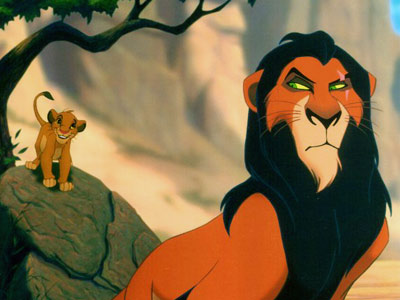
The idea I've been kicking around for the last couple of weeks is a shift in representation throughout the years in the heroes of animated films, an idea that came about when the televisual airwaves were saturated with advertisements for the re-release of one of my animated favorite films growing up: The Lion King. Of course, I own the DVD (soon to own the Blu-Ray), so I watched it at home the other day and was struck by a dynamic that had always puzzled me when I was younger: Parents and society in general push for children to demonstrate some kind of intelligence, but for some reason the heroes of my childhood rarely expressed a heightened form of intelligence; such extreme intelligence was reserved for the villains, not the heroes. The heroes were to be intelligent so long as they weren't too intelligent.
Thankfully, this characterization has changed, as demonstrated by another favorite of mine (a more recent film): How to Train Your Dragon. In this particular film, the hero lacks any kind of physical strength, a bad thing in a society that prizes physical prowess over an intellectual ability to solve problems. Of course, society sees the error of its ways when a combination of intelligence and physicality is required to save them all from a monstrous dragon.
As opposed to The Lion King, How to Train Your Dragon demonstrates how artistic representations of heroes and villains have shifted due to society's increased need for "geek" knowledge to navigate through all the rapid technological changes we've experienced. Both films remain two of my favorites; nevertheless, I'm glad for the change. Now I don't have to harbor secret fascinations with villains like Scar and Ursula, who display cunning and intelligence, but instead can see intelligence displayed on screen as a positive, not something to be feared.
In the article, the writer explains that a current shift in representations of masculinity is occurring in this season's lineup, and I'd have to agree. As a student of popular culture, I frequently look at how women, men, children, and all other "character types" are represented. It's a fascinating past-time, and it's this studying of representation that gets me through Tim's fascination with all things reality (namely, all the Housewives and Big Rich Texas). However, how the genders are being represented is not the subject of this blog post; although, I hope the above articled get the mind to thinking.
The idea I've been kicking around for the last couple of weeks is a shift in representation throughout the years in the heroes of animated films, an idea that came about when the televisual airwaves were saturated with advertisements for the re-release of one of my animated favorite films growing up: The Lion King. Of course, I own the DVD (soon to own the Blu-Ray), so I watched it at home the other day and was struck by a dynamic that had always puzzled me when I was younger: Parents and society in general push for children to demonstrate some kind of intelligence, but for some reason the heroes of my childhood rarely expressed a heightened form of intelligence; such extreme intelligence was reserved for the villains, not the heroes. The heroes were to be intelligent so long as they weren't too intelligent.
Thankfully, this characterization has changed, as demonstrated by another favorite of mine (a more recent film): How to Train Your Dragon. In this particular film, the hero lacks any kind of physical strength, a bad thing in a society that prizes physical prowess over an intellectual ability to solve problems. Of course, society sees the error of its ways when a combination of intelligence and physicality is required to save them all from a monstrous dragon.
As opposed to The Lion King, How to Train Your Dragon demonstrates how artistic representations of heroes and villains have shifted due to society's increased need for "geek" knowledge to navigate through all the rapid technological changes we've experienced. Both films remain two of my favorites; nevertheless, I'm glad for the change. Now I don't have to harbor secret fascinations with villains like Scar and Ursula, who display cunning and intelligence, but instead can see intelligence displayed on screen as a positive, not something to be feared.
Tuesday, September 20, 2011
Dallas Pride and the BITCH Comes Out!
This past weekend, I finally had a taste of what it's like to celebrate Gay Pride here in Dallas. Sure, I've been to Gay Days at Disney World, but I didn't participate in any of the events outside of the park, opting for visiting the parks instead (I mean, that's why you go to Disney World, right?).
Well, this year Dallas Pride was most assuredly was a "gay" weekend. And boy was it fun!
I got to see a couple of amazing drag shows at the Rose Room.
Cher even made an appearance... well, her impersonator, anyway. :) She even lip-synched my favorite Cher song: "Dark Lady."
Unfortunately, I didn't get that many pictures of the lovely ladies that performed. They were moving too fast the first night, and I forgot the camera the second night, which really bit the big one because that was probably the best drag show I've seen yet in Dallas.
The parade was cool, but more for the people watching the parade route than for the parade itself. Although, there were some really cool floats. Like this one:
;)
No really, the people were the best and worst parts of the parade. Our group of four even got bowled over by a massive woman wanted to "move [her] BIG ass to the front." There were also plenty of boys and girls in their underwear, often prompting the phrase, "Skinny bitch." A few people in leather. And one really brave woman who opted to go shirt and bra-less, covering up her naughty bits with some well-placed electrical tape.
Despite all of this, and quite unfortunately as you will discover, our group couldn't quite get passed the quiet one of the group (me) releasing his inner bitch on a poor unsuspecting Black-Eyed Pea server. Poor thing. I still feel incredibly bad about that. My reaction became a mantra of sorts for the rest of the weekend.
Here's what happened:
I had ordered the fried chicken tenderloins with macaroni and cheese and seasoned rice. Our order arrived and I was horrified to see my fried chicken tenderloins accompanied by fries and mashed potatoes. I hate mashed potatoes (with a passion apparently).
The server started handing me my plate and I said, "Um, I ordered macaroni and cheese and seasoned rice. I hate mashed potatoes, so I know I didn't order mashed potatoes."
Everyone was stunned. The server looked shocked. And I didn't notice that I'd said anything amiss.
The server left my plate and promised to bring out my sides quickly, which he did. At this point, my fiance, his cousin and her fiance, informed me of how bitchy my response was. Now it was my turn to be shocked. I was horrified to have said such a thing in that way. Needless to say, I was very nice to him from that moment on. And we left a good tip.
Lesson of the weekend: Be careful of Pride, because too much can cause unsuspecting symptoms of the bad kind of "bitchy gay."
Aside from that embarrassing episode, we had a fabulous time. I hope to have a great time again next year, minus my snob-moment from above, of course.
Well, this year Dallas Pride was most assuredly was a "gay" weekend. And boy was it fun!
I got to see a couple of amazing drag shows at the Rose Room.
Cher even made an appearance... well, her impersonator, anyway. :) She even lip-synched my favorite Cher song: "Dark Lady."
Unfortunately, I didn't get that many pictures of the lovely ladies that performed. They were moving too fast the first night, and I forgot the camera the second night, which really bit the big one because that was probably the best drag show I've seen yet in Dallas.
The parade was cool, but more for the people watching the parade route than for the parade itself. Although, there were some really cool floats. Like this one:
;)
No really, the people were the best and worst parts of the parade. Our group of four even got bowled over by a massive woman wanted to "move [her] BIG ass to the front." There were also plenty of boys and girls in their underwear, often prompting the phrase, "Skinny bitch." A few people in leather. And one really brave woman who opted to go shirt and bra-less, covering up her naughty bits with some well-placed electrical tape.
Despite all of this, and quite unfortunately as you will discover, our group couldn't quite get passed the quiet one of the group (me) releasing his inner bitch on a poor unsuspecting Black-Eyed Pea server. Poor thing. I still feel incredibly bad about that. My reaction became a mantra of sorts for the rest of the weekend.
Here's what happened:
I had ordered the fried chicken tenderloins with macaroni and cheese and seasoned rice. Our order arrived and I was horrified to see my fried chicken tenderloins accompanied by fries and mashed potatoes. I hate mashed potatoes (with a passion apparently).
The server started handing me my plate and I said, "Um, I ordered macaroni and cheese and seasoned rice. I hate mashed potatoes, so I know I didn't order mashed potatoes."
Everyone was stunned. The server looked shocked. And I didn't notice that I'd said anything amiss.
The server left my plate and promised to bring out my sides quickly, which he did. At this point, my fiance, his cousin and her fiance, informed me of how bitchy my response was. Now it was my turn to be shocked. I was horrified to have said such a thing in that way. Needless to say, I was very nice to him from that moment on. And we left a good tip.
Lesson of the weekend: Be careful of Pride, because too much can cause unsuspecting symptoms of the bad kind of "bitchy gay."
Aside from that embarrassing episode, we had a fabulous time. I hope to have a great time again next year, minus my snob-moment from above, of course.
Thursday, September 8, 2011
Reflected Images: J.K. Rowling's Posthuman Epic
A couple of weeks ago, I delivered a guest lecture for one of my colleagues and it was one of the best experiences I’ve had as an instructor. The class itself was covering the basics of mythology and its role in society. I was asked to discuss how witches and wizards are being represented in today’s popular literature. More specifically, how the Harry Potter series’ representations of witches/wizards fit into the overall understanding of modern myths.
Needless to say, I was very excited about the prospect of delivering a lecture on one of the best reading experiences I’ve had over the past nine years. In addition, I was being given an opportunity to discuss something I’d only discussed with my thesis committee: my thesis. After all, I doubt anyone but my committee has read it. This lecture provided me the opportunity to cut some of the fat from my thesis and present it in a manner that would be digestible by an undergraduate audience.
The class was a fantastic audience. They asked probing questions that demonstrated they’d paid attention throughout the whole lecture. Unlike my usual lectures on grammar, punctuation, and essay structure, all of these students were wide awake and attentive. I couldn’t have been more pleased.
After the lecture, a friend of mine showed interest in what I covered, so I thought my blog would be the perfect place for the written version of my presentation. And that’s exactly what I present to you today, my analysis of the Harry Potter series … minus the off-topic protrusions that characterize my normal delivery process, of course.
Recently, Harry Potter series was declared the most successful film franchise of all time, topping even James Bond, and with fewer films. The power of J.K. Rowling’s imagination has captivated millions of filmgoers, but what’s more impressive is the fact that her series is also one of the most successful stories in publishing history.
The story is relatively simple: a humble orphan learns he has magical powers, learns more about his abilities, and battles with the forces of evil. This outline could describe any number of myths and stories throughout the years. Indeed, this could describe the Star Wars saga. Both Harry Potter and Star Wars share a common mythical ancestry: the hero myth. In addition, they also share another interesting aspect: a focus on technological influences on society.
One of the more interesting characteristics of Rowling’s story is the battle between differing versions of humanity, or rather different conceptions of what it means to be human. Harry and Voldemort’s battle illustrates a struggle that is very pertinent to contemporary society: as technology changes so does our perception of its possibilities. Voldemort uses technology in order to extend and prolong his life, discounting the disastrous effects it has not only for his community but also for his own consciousness. Harry, on the other hand, accepts the fact that human consciousness is intrinsically tied with body and that life has one inevitability: We are all mortal, and so we all must eventually succumb to death.
In order to better explain my approach to Rowling’s series, it is important to explain a few of the theories used in my analysis. James Berger’s book After the End: Representations of the Apocalypse, N. Katherine Hayles’ How We Became Posthuman: Virtual Bodies in Cybernetics, Literature, and Informatics, and Joseph L Henderson and Joseph Campbell’s work on the heroic myth have all been especially helpful in illuminating Rowling’s work.
Trauma and Apocalypse
Representations of trauma and apocalypse are fascinating subjects in literature. Trauma has always been around, but not until Freud began studying shell-shocked soldiers of World War I did trauma’s psychological effects become the focus of extensive study and analysis. James Berger takes Freud’s theories and expands on them to include traumas suffered at the cultural, or societal, level: the apocalyptic event.
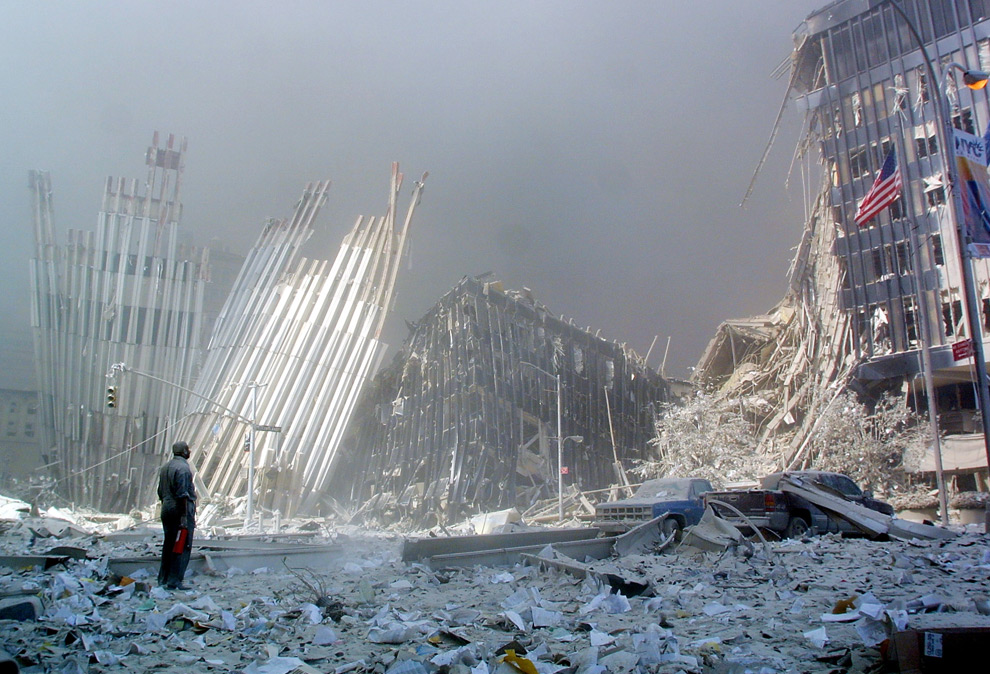
Indeed, the apocalypse is frequently depicted in art and literature, and at times real-life scenarios seem to mimic those representations. 9/11 and Hiroshima/Nagasaki are two events that can be considered modern apocalyptic events as the images of those tragedies proliferated around the world, creating a feeling of shared-experience despite the distance most people were from the events. For the people living at “ground zero” all forms of narrative, the normalcy of their lives, were destroyed, obliterated to the point where nothing but a gaping void was left. This void, this lack of narrative, produces similar traumatic symptoms felt by an individual but at the societal level. Instead of one person suffering from the scars of trauma, a whole group of people demonstrate symptoms that stem from a shared traumatic experience.
Posthumanity and Information Technologies
The concept of a posthuman existence is relatively new, or rather tied with the advance of information technologies, most notably the Internet. As technology takes over tasks for the human brain, posthuman theorists beg the question: “In an age where technology’s influence over us grows day by day, how do we define what it means to be human?” What concerns N. Katherine Hayles, in her book How We Became Posthuman, is the perception in representations of human interaction with technology that the body can be dispensed with in a few keystrokes.
So are we becoming cybernetic beings?
The short answer: Not yet.
The long answer: The posthuman is not necessarily a robot but a human being who perceives human consciousness as disembodied, without a body and with a consciousness that is potentially capable of moving from one bodied form to another. Cyborgs are a prevalent fixture in sci-fi literature, and the Borg in the Star Trek universe and their complete disregard for individual subjectivity is just example in popular culture of the path humans can take when interacting with information technologies. Hayles is attempting to assert the fact that our brains are tied to our bodies through much more than bits of data. Indeed, our bodies contain the evolutionary codes that have been passed down generation to generation; and to separate human consciousness from the very processes that gave birth to it in the first place would be detrimental to human subjectivity. In other words, we could no longer consider ourselves to be human, but something else entirely. Thankfully, we have not reached that point, yet.
Heroic Quest
The hero myth continues to resurface in our art, our literature, and in other aspects of popular culture. Psychologically speaking, it is a process of individuation, where an individual struggles, matures, and discovers his/her own place within society. Joseph L. Henderson describes the heroic myth, found in his chapter in Man and His Symbols, in the following way:
The heroic archetype as a cultural artifact works in a different way than an individual’s heroic psychological process because the hero usually acts as sacrificial figure, saving society from whatever evil is besetting it. Jesus is a powerful sacrificial figure in society, acting in the same way Henderson writes above. His sacrifice is believed to have saved the whole of society from sin, so each person can have a fresh start in leading a good and humble life. Instead of relieving the world of sin, the literary heroic figure can serve as the savior for the psychological well-being of an entire culture. Luke Sykwalker’s journey and struggles with a dictatorial government mirror our own struggles with the problems of our society. As Skywalker matures so do we… At least that’s the theory.
Trauma and Harry Potter
Now, how does all of this apply to Harry Potter? Well, trauma is the easiest to spot because it is so prevalent throughout the entire series. The whole series begins with a traumatic event: the death of Harry’s parents. Everything in the series revolves around this specific event, but there are plenty of other traumatic events as well.
Indeed, one traumatic event, which does not appear in the series itself, seriously affected everything that came after. J.K. Rowling’s mother passed away not long after Rowling began writing the series. She writes on her website, “[On] December 30th 1990, something happened that changed both my world and Harry’s forever: my mother died…” (Official Site). After her mother died, Rowling’s own writing changed in regards to Harry’s feelings about his parents’ death. It became more real.
Plenty of time is devoted to the fact that Harry and Voldemort have so much in common. What is missing from the films is Voldemort’s complete backstory. In the films, Voldemort is not all that complicated, but the personification of pure evil. However, Rowling demonstrates that evil is not necessarily inherent in all beings, even one so horrible as Voldemort. Indeed, Voldemort’s mother, Merope Guant, suffered much in her own life, so much so that she drafted a love potion and administered it to the son of a wealthy muggle family: Tom Riddle Sr. They married, but not long after, she decided to stop giving Riddle Sr. the potion out a need to feel real love and not the manufactured infatuation of her magic. Needless, to say Riddle was shocked and left his wife, saying he’d been tricked, drugged, all despite the fact that she was very pregnant.
Devastated, Merope made her way to a London orphanage, delivered her baby, told the women there what the baby’s name was to be (Tom Marvolo Riddle), and subsequently died. Tom Riddle Jr. lived the first eleven years of his life in that orphanage, enjoying it as much as Harry enjoyed living with his aunt and uncle. He discovered his special abilities and used those abilities to control others. Once he discovered he was a wizard, through Albus Dumbledore, he knew his family must have been special, powerful. Needless to say he was disappointed to discover that his father was a Muggle and that his mother, poor and weak, had died rather than raise her son. A seething hatred began to grow within the young boy. How could a woman with magic powers die? There had to be a way to overcome the fate of all mortals: death.
Apocalypse and Harry Potter
In addition to Harry and Voldemort’s traumatic pasts, the whole of society has suffered as well, but for the wizarding community it would better termed an apocalyptic event. Hagrid, that wonderful character who sums up everything pretty well, tells Harry about the days before his parents were killed:
The entire community is coming out of its own apocalyptic event when Harry discovers he’s a wizard. People still fear to speak Voldemort’s name, preferring instead He-Who-Must-Not-Be-Named or You-Know-Who. After all, no one really understands what happened the night Voldemort disappeared and a one-year-old child survived the Killing Curse, a curse that had caused so much devastation. The society does not have the entire story; they do not know the whole narrative of what happened. Also, Voldemort’s body was never found as it had been blasted away, obliterated as the curse rebounded. Like a specter, an unholy spirit, his presence was still felt in the community. The community trauma had not been purged from the cultural consciousness. And so, Harry enters the story, a story already in progress, and finds that a second Wizard War is approaching, yet another apocalyptic event.
Dumbledore understands the necessity of knowing the whole story before acting. He was pleased with Harry when Harry asked Dumbledore what was to happen to Flamel and his wife now that the stone had been destroyed; “’You did do the thing properly’” (Sorcerer’s Stone 297). And when Dumbledore invites Harry to for lessons in his office, Dumbledore stresses the importance of knowing Voldemort’s story before attempting to attack him. Indeed, it is Harry’s knowledge of Voldemort’s personality that leads him to the horcruxes.
Knowing the whole story, or narrative, is one of the most important aspects to Rowling’s series. And while many readers probably found some of the explanations in the series a bit boring, they were very necessary. For only after knowing the full story is an individual and community able to truly begin the healing process.
Magic as Technology?
Arthur C. Clarke is famous for saying, “Any sufficiently advanced technology is indistinguishable from magic.” This part of the lecture is probably the most difficult to prove and also the most interesting to hear because of its implications.
The world of Harry Potter begins in early 90’s England; the Internet was in its infancy and more and more homes were getting desktop computers. Now, it seems at first that Harry and his friends leave this technological world for a seemingly pre-industrial world without computers, without television, and without electricity. However, this is merely window dressing. The wizarding community does not use magic in the traditional sense. They do not conjure spirits, speak to gods, or act as mediums between the spirit world and the real world. All of the magic performed in the Harry Potter series is actually much more mundane.
Take a look at the scene in Harry Potter and the Chamber of Secrets, when Harry first sees exactly what a wizard family’s home is like. Mrs. Weasley has set some dishes to wash, needles are working some yarn, and a wonderful clock provides real-time information on the whereabouts of the Weasley family. Or take a look at another scene, this one from Harry Potter and the Prisoner of Azkaban, when Harry walks into the Leaky Cauldron to meet with the Minister of Magic, Cornelius Fudge. A waiter is busing a table, making a bottle of wine disappear, and waving his hand to command the chairs to put themselves away; a customer is reading A Brief History of Time and stirring his cup of tea without touching the spoon. All of these events can hardly be considered as grand as conjuring spirits.
Yes, it seems witches and wizards in Rowling’s universe use magic in much the same way as we use technology. (Note: If you’re wondering about television and film, don’t forget that the portraits and the pictures in newspapers and advertisements move just like the images on our television/film screens. Granted, most of the time they don’t tell a straight narrative, but some shows and films hardly deliver anything more interesting than what the pictures in Rowling’s universe deliver.)
Voldemort uses the technology of the wizarding community to achieve immortality, by breaking apart his consciousness and downloading that part into an object of some kind; “’Some say he died. Codswallop, in my opinion. Dunno if he had enough human left in him to die’” (Sorcerer’s Stone 57, my emphasis). He’s basically using the “Save” button, saving bits of consciousness at various stages in his life! Now, when I hit the save button nobody dies (at least I hope not!), but a piece of my life, a piece of my writing is being saved for the unforeseeable future, unless I decide to delete the project. And now that Cloud software is becoming more and more available, I could save my work, those little pieces of my soul, and it would continue to exist (conceivably) for a very long time, possibly beyond my death.
Professor Slughorn describes the process of creating horcruxes to young Tom Riddle Jr. in Harry Potter and the Half-Blood Prince:
He goes on to tell Riddle Jr. that in order to create a horcrux a person must commit an act of murder, “’an act of violation, it is against nature’” (Half-Blood Prince 498). Dumbledore even mentions that Voldemort had performed such dark magic that he had transformed his body to the point that it was hardly recognizable as being human in form. Rowling describes Voldemort as being a hybrid of snake and man.
Voldemort is looking more and more like Locutus.

Harry’s Sacrifice
The heroic sacrifice discussed above happens when Harry discovers he has the power to destroy Voldemort, but Harry will have to die to accomplish Voldemort’s destruction: “’And while [a fragment of Voldemort’s soul]… attached to and protected by Harry, Lord Voldemort cannot die’” (Hallows 686). In order to save the wizarding community, Harry must sacrifice himself. This is the point where Harry solidly demonstrates his difference from Voldemort. Having experienced so much death in his life, Harry is under no illusion; he is aware that he is fated to die; Harry harbors no illusion of immortality. And if his death will save others so they can live fuller lives, Harry is willing to lay down his life.
Harry and Voldemort represent a clear delineation of how Rowling perceives and defines humanity: acceptance of death and the fact that our bodies are intrinsically linked to our consciousness, our soul. She does present the possibility of an afterlife, but it is the next journey of our consciousness/soul. We are not meant to exist on this plane of existence after our bodies have expired. As technology and our information systems take over more of our lives, we are faced with how to define what it means to be human. Rowling presents a posthuman epic of how we can incorporate technology into our lives without sacrificing the basic realities of being human.
Needless to say, I was very excited about the prospect of delivering a lecture on one of the best reading experiences I’ve had over the past nine years. In addition, I was being given an opportunity to discuss something I’d only discussed with my thesis committee: my thesis. After all, I doubt anyone but my committee has read it. This lecture provided me the opportunity to cut some of the fat from my thesis and present it in a manner that would be digestible by an undergraduate audience.
The class was a fantastic audience. They asked probing questions that demonstrated they’d paid attention throughout the whole lecture. Unlike my usual lectures on grammar, punctuation, and essay structure, all of these students were wide awake and attentive. I couldn’t have been more pleased.
After the lecture, a friend of mine showed interest in what I covered, so I thought my blog would be the perfect place for the written version of my presentation. And that’s exactly what I present to you today, my analysis of the Harry Potter series … minus the off-topic protrusions that characterize my normal delivery process, of course.
Reflected Images: J.K. Rowling’s Posthuman Epic
Recently, Harry Potter series was declared the most successful film franchise of all time, topping even James Bond, and with fewer films. The power of J.K. Rowling’s imagination has captivated millions of filmgoers, but what’s more impressive is the fact that her series is also one of the most successful stories in publishing history.
The story is relatively simple: a humble orphan learns he has magical powers, learns more about his abilities, and battles with the forces of evil. This outline could describe any number of myths and stories throughout the years. Indeed, this could describe the Star Wars saga. Both Harry Potter and Star Wars share a common mythical ancestry: the hero myth. In addition, they also share another interesting aspect: a focus on technological influences on society.
One of the more interesting characteristics of Rowling’s story is the battle between differing versions of humanity, or rather different conceptions of what it means to be human. Harry and Voldemort’s battle illustrates a struggle that is very pertinent to contemporary society: as technology changes so does our perception of its possibilities. Voldemort uses technology in order to extend and prolong his life, discounting the disastrous effects it has not only for his community but also for his own consciousness. Harry, on the other hand, accepts the fact that human consciousness is intrinsically tied with body and that life has one inevitability: We are all mortal, and so we all must eventually succumb to death.
In order to better explain my approach to Rowling’s series, it is important to explain a few of the theories used in my analysis. James Berger’s book After the End: Representations of the Apocalypse, N. Katherine Hayles’ How We Became Posthuman: Virtual Bodies in Cybernetics, Literature, and Informatics, and Joseph L Henderson and Joseph Campbell’s work on the heroic myth have all been especially helpful in illuminating Rowling’s work.
Trauma and Apocalypse
Representations of trauma and apocalypse are fascinating subjects in literature. Trauma has always been around, but not until Freud began studying shell-shocked soldiers of World War I did trauma’s psychological effects become the focus of extensive study and analysis. James Berger takes Freud’s theories and expands on them to include traumas suffered at the cultural, or societal, level: the apocalyptic event.
Trauma is the psychiatric form of apocalypse… Trauma produces symptoms in its wake, after the event, and we reconstruct trauma by interpreting these symptoms, reading back in time… Both apocalypse and trauma present the most difficult question of what happened “before,” and what is the situation “after.” The apocalyptic-historical-traumatic event becomes a crux or pivot that forces a retelling and revaluing of all events that lead up to and all that follow. (Berger 20-1)
Indeed, the apocalypse is frequently depicted in art and literature, and at times real-life scenarios seem to mimic those representations. 9/11 and Hiroshima/Nagasaki are two events that can be considered modern apocalyptic events as the images of those tragedies proliferated around the world, creating a feeling of shared-experience despite the distance most people were from the events. For the people living at “ground zero” all forms of narrative, the normalcy of their lives, were destroyed, obliterated to the point where nothing but a gaping void was left. This void, this lack of narrative, produces similar traumatic symptoms felt by an individual but at the societal level. Instead of one person suffering from the scars of trauma, a whole group of people demonstrate symptoms that stem from a shared traumatic experience.
Posthumanity and Information Technologies
The concept of a posthuman existence is relatively new, or rather tied with the advance of information technologies, most notably the Internet. As technology takes over tasks for the human brain, posthuman theorists beg the question: “In an age where technology’s influence over us grows day by day, how do we define what it means to be human?” What concerns N. Katherine Hayles, in her book How We Became Posthuman, is the perception in representations of human interaction with technology that the body can be dispensed with in a few keystrokes.
If my nightmare is a culture inhabited by posthumans who regard their bodies as fashion accessories rather than the ground of being, my dream is a version of the posthuman that embraces the possibilities of information technologies without being seduced by fantasies of unlimited power and disembodied immortality… and that understands human life is embedded in a material world of great complexity, one in which we depend for our continued survival. (Hayles 5, my emphasis)
So are we becoming cybernetic beings?
The short answer: Not yet.
The long answer: The posthuman is not necessarily a robot but a human being who perceives human consciousness as disembodied, without a body and with a consciousness that is potentially capable of moving from one bodied form to another. Cyborgs are a prevalent fixture in sci-fi literature, and the Borg in the Star Trek universe and their complete disregard for individual subjectivity is just example in popular culture of the path humans can take when interacting with information technologies. Hayles is attempting to assert the fact that our brains are tied to our bodies through much more than bits of data. Indeed, our bodies contain the evolutionary codes that have been passed down generation to generation; and to separate human consciousness from the very processes that gave birth to it in the first place would be detrimental to human subjectivity. In other words, we could no longer consider ourselves to be human, but something else entirely. Thankfully, we have not reached that point, yet.
Heroic Quest
The hero myth continues to resurface in our art, our literature, and in other aspects of popular culture. Psychologically speaking, it is a process of individuation, where an individual struggles, matures, and discovers his/her own place within society. Joseph L. Henderson describes the heroic myth, found in his chapter in Man and His Symbols, in the following way:
[Hero] myths vary enormously in detail, but the more closely one examines them the more one sees that structurally they are very similar… Over and over again one hears a tale describing a hero’s early proof of superhuman strength, his rise to prominence of power, his triumphant struggles with the forces of evil, his fallibility… his fall through betrayal or “heroic” sacrifice that ends in his death. (Henderson 101)
The heroic archetype as a cultural artifact works in a different way than an individual’s heroic psychological process because the hero usually acts as sacrificial figure, saving society from whatever evil is besetting it. Jesus is a powerful sacrificial figure in society, acting in the same way Henderson writes above. His sacrifice is believed to have saved the whole of society from sin, so each person can have a fresh start in leading a good and humble life. Instead of relieving the world of sin, the literary heroic figure can serve as the savior for the psychological well-being of an entire culture. Luke Sykwalker’s journey and struggles with a dictatorial government mirror our own struggles with the problems of our society. As Skywalker matures so do we… At least that’s the theory.
Only birth can conquer death--the birth, not of the old thing again, but of something new. Within the soul, within the body social, there must be--if we are to experience long survival--a continuous "recurrence of birth" ... to nullify the unremitting recurrences of death. (Campbell 11-6, my emphasis)
Trauma and Harry Potter
Now, how does all of this apply to Harry Potter? Well, trauma is the easiest to spot because it is so prevalent throughout the entire series. The whole series begins with a traumatic event: the death of Harry’s parents. Everything in the series revolves around this specific event, but there are plenty of other traumatic events as well.
Indeed, one traumatic event, which does not appear in the series itself, seriously affected everything that came after. J.K. Rowling’s mother passed away not long after Rowling began writing the series. She writes on her website, “[On] December 30th 1990, something happened that changed both my world and Harry’s forever: my mother died…” (Official Site). After her mother died, Rowling’s own writing changed in regards to Harry’s feelings about his parents’ death. It became more real.
Plenty of time is devoted to the fact that Harry and Voldemort have so much in common. What is missing from the films is Voldemort’s complete backstory. In the films, Voldemort is not all that complicated, but the personification of pure evil. However, Rowling demonstrates that evil is not necessarily inherent in all beings, even one so horrible as Voldemort. Indeed, Voldemort’s mother, Merope Guant, suffered much in her own life, so much so that she drafted a love potion and administered it to the son of a wealthy muggle family: Tom Riddle Sr. They married, but not long after, she decided to stop giving Riddle Sr. the potion out a need to feel real love and not the manufactured infatuation of her magic. Needless, to say Riddle was shocked and left his wife, saying he’d been tricked, drugged, all despite the fact that she was very pregnant.
Devastated, Merope made her way to a London orphanage, delivered her baby, told the women there what the baby’s name was to be (Tom Marvolo Riddle), and subsequently died. Tom Riddle Jr. lived the first eleven years of his life in that orphanage, enjoying it as much as Harry enjoyed living with his aunt and uncle. He discovered his special abilities and used those abilities to control others. Once he discovered he was a wizard, through Albus Dumbledore, he knew his family must have been special, powerful. Needless to say he was disappointed to discover that his father was a Muggle and that his mother, poor and weak, had died rather than raise her son. A seething hatred began to grow within the young boy. How could a woman with magic powers die? There had to be a way to overcome the fate of all mortals: death.
Apocalypse and Harry Potter
In addition to Harry and Voldemort’s traumatic pasts, the whole of society has suffered as well, but for the wizarding community it would better termed an apocalyptic event. Hagrid, that wonderful character who sums up everything pretty well, tells Harry about the days before his parents were killed:
“Dark days, Harry. Didn’t know who ter trust, didn’t dare get friendly with strange wizards or witches… terrible things happened. He was takin’ over. ‘Course, some stood up to him—an’ he killed ‘em. Horribly. One o’ the only safe places left was Hogwarts.” (Sorcerer’s Stone 54-5)
The entire community is coming out of its own apocalyptic event when Harry discovers he’s a wizard. People still fear to speak Voldemort’s name, preferring instead He-Who-Must-Not-Be-Named or You-Know-Who. After all, no one really understands what happened the night Voldemort disappeared and a one-year-old child survived the Killing Curse, a curse that had caused so much devastation. The society does not have the entire story; they do not know the whole narrative of what happened. Also, Voldemort’s body was never found as it had been blasted away, obliterated as the curse rebounded. Like a specter, an unholy spirit, his presence was still felt in the community. The community trauma had not been purged from the cultural consciousness. And so, Harry enters the story, a story already in progress, and finds that a second Wizard War is approaching, yet another apocalyptic event.
Dumbledore understands the necessity of knowing the whole story before acting. He was pleased with Harry when Harry asked Dumbledore what was to happen to Flamel and his wife now that the stone had been destroyed; “’You did do the thing properly’” (Sorcerer’s Stone 297). And when Dumbledore invites Harry to for lessons in his office, Dumbledore stresses the importance of knowing Voldemort’s story before attempting to attack him. Indeed, it is Harry’s knowledge of Voldemort’s personality that leads him to the horcruxes.
Knowing the whole story, or narrative, is one of the most important aspects to Rowling’s series. And while many readers probably found some of the explanations in the series a bit boring, they were very necessary. For only after knowing the full story is an individual and community able to truly begin the healing process.
Magic as Technology?
Arthur C. Clarke is famous for saying, “Any sufficiently advanced technology is indistinguishable from magic.” This part of the lecture is probably the most difficult to prove and also the most interesting to hear because of its implications.
The world of Harry Potter begins in early 90’s England; the Internet was in its infancy and more and more homes were getting desktop computers. Now, it seems at first that Harry and his friends leave this technological world for a seemingly pre-industrial world without computers, without television, and without electricity. However, this is merely window dressing. The wizarding community does not use magic in the traditional sense. They do not conjure spirits, speak to gods, or act as mediums between the spirit world and the real world. All of the magic performed in the Harry Potter series is actually much more mundane.
Take a look at the scene in Harry Potter and the Chamber of Secrets, when Harry first sees exactly what a wizard family’s home is like. Mrs. Weasley has set some dishes to wash, needles are working some yarn, and a wonderful clock provides real-time information on the whereabouts of the Weasley family. Or take a look at another scene, this one from Harry Potter and the Prisoner of Azkaban, when Harry walks into the Leaky Cauldron to meet with the Minister of Magic, Cornelius Fudge. A waiter is busing a table, making a bottle of wine disappear, and waving his hand to command the chairs to put themselves away; a customer is reading A Brief History of Time and stirring his cup of tea without touching the spoon. All of these events can hardly be considered as grand as conjuring spirits.
Yes, it seems witches and wizards in Rowling’s universe use magic in much the same way as we use technology. (Note: If you’re wondering about television and film, don’t forget that the portraits and the pictures in newspapers and advertisements move just like the images on our television/film screens. Granted, most of the time they don’t tell a straight narrative, but some shows and films hardly deliver anything more interesting than what the pictures in Rowling’s universe deliver.)
Voldemort uses the technology of the wizarding community to achieve immortality, by breaking apart his consciousness and downloading that part into an object of some kind; “’Some say he died. Codswallop, in my opinion. Dunno if he had enough human left in him to die’” (Sorcerer’s Stone 57, my emphasis). He’s basically using the “Save” button, saving bits of consciousness at various stages in his life! Now, when I hit the save button nobody dies (at least I hope not!), but a piece of my life, a piece of my writing is being saved for the unforeseeable future, unless I decide to delete the project. And now that Cloud software is becoming more and more available, I could save my work, those little pieces of my soul, and it would continue to exist (conceivably) for a very long time, possibly beyond my death.
Professor Slughorn describes the process of creating horcruxes to young Tom Riddle Jr. in Harry Potter and the Half-Blood Prince:
“Well, you split your soul, you see,’ said Slughorn, “and hide part of it in an object outside the body. Then, even if your body is attacked or destroyed, one cannot die, for part of the soul remains earthbound and undamaged.” (Half-Blood Prince 497)
He goes on to tell Riddle Jr. that in order to create a horcrux a person must commit an act of murder, “’an act of violation, it is against nature’” (Half-Blood Prince 498). Dumbledore even mentions that Voldemort had performed such dark magic that he had transformed his body to the point that it was hardly recognizable as being human in form. Rowling describes Voldemort as being a hybrid of snake and man.
Voldemort is looking more and more like Locutus.

Harry’s Sacrifice
The heroic sacrifice discussed above happens when Harry discovers he has the power to destroy Voldemort, but Harry will have to die to accomplish Voldemort’s destruction: “’And while [a fragment of Voldemort’s soul]… attached to and protected by Harry, Lord Voldemort cannot die’” (Hallows 686). In order to save the wizarding community, Harry must sacrifice himself. This is the point where Harry solidly demonstrates his difference from Voldemort. Having experienced so much death in his life, Harry is under no illusion; he is aware that he is fated to die; Harry harbors no illusion of immortality. And if his death will save others so they can live fuller lives, Harry is willing to lay down his life.
Harry and Voldemort represent a clear delineation of how Rowling perceives and defines humanity: acceptance of death and the fact that our bodies are intrinsically linked to our consciousness, our soul. She does present the possibility of an afterlife, but it is the next journey of our consciousness/soul. We are not meant to exist on this plane of existence after our bodies have expired. As technology and our information systems take over more of our lives, we are faced with how to define what it means to be human. Rowling presents a posthuman epic of how we can incorporate technology into our lives without sacrificing the basic realities of being human.
Works Cited
Berger, James. After the End: Representations of Post-Apocalypse. Minneapolis: Minnesota UP, 1999. Print.
Campbell, Joseph. The Hero with a Thousand Faces. Princeton: Princeton UP, 1949. Print.
Hayles, N. Kathernine. How We Became Posthuman: Virtual Bodies in Cybernetics, Literature, and Informatics. Chicago: Chicago UP, 1999. Print.
Henderson, Joseph L. "Ancient Myths and Modern Man." Man and His Symbols. Ed. Carl G. Jung. London: Aldus Books, 1964. Print.
J.K. Rowling Official Site: Harry Potter and More. 2006. Lightmaker. 16 March 2009. Web.
Rowling, J.K. Harry Potter and the Deathly Hallows. New York: Scholastic, 2007. Print.
---. Harry Potter and the Half-Blood Prince. New York: Scholastic, 2007. Print.
---. Harry Potter and the Sorcerer's Stone. New York: Scholastic, 1997. Print.
Subscribe to:
Posts (Atom)